VELO Bay of Kotor
Kotor, between stone and sea.
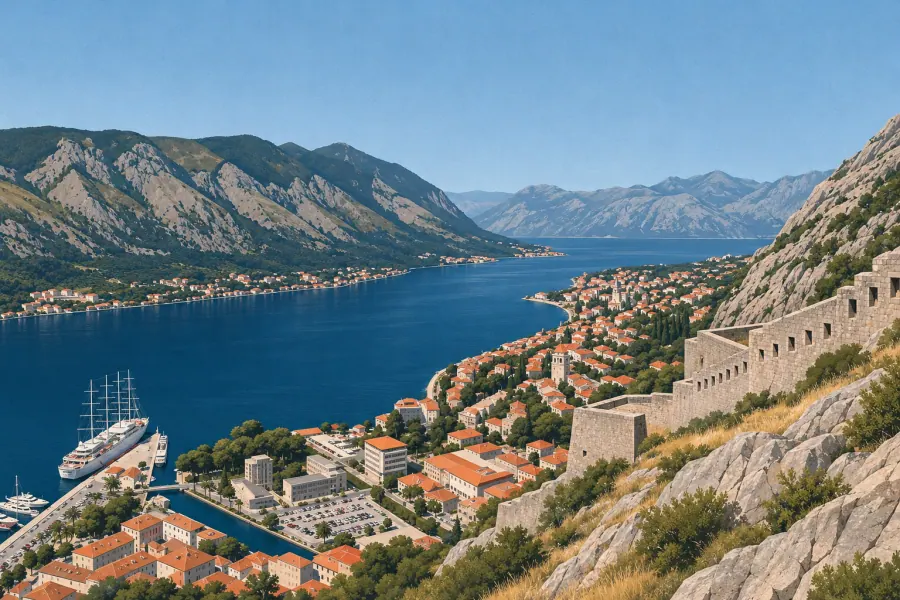
In Kotor, your attention moves between small details and an enormous landscape: a crest above a doorway, a narrow lane, then the mountain enclosing the bay. Explore the Old Town on foot, but leave room for the waterfront. After the landmarks, find a square and sit for a while. This is a place to spend time in, as well as photograph.
Montenegro, through VELO guides
Kotor · Taxis and getting around
Staying inside the Old Town? Ask your host which gate to approach. Choose a pickup or drop-off point where stopping is permitted and you can walk the rest of the way.
Enter your pickup and destination in the VELO app to see a fare estimate before requesting a ride.
At a glance
- Suggested stay
- 2 days for the town and bay
- Best suited to
- History lovers and curious walkers
- A good rhythm
- An early start, then take your time
01 Kotor
Places worth discovering
The Old Town, close up
Start with St Tryphon’s Cathedral and the stone squares, then turn into a quieter lane. Notice doorways, family crests and the changing scale of the streets. Kotor belongs to a UNESCO property valued for the relationship between its settlements, coast and mountains. Looking beyond the walls helps explain what makes this setting remarkable.
A bay shaped by seafaring
The Maritime Museum of Montenegro gives the town’s seafaring past a place in your visit. Allow time for the collections that interest you. A waterfront walk afterwards becomes more meaningful: the bay is a landscape of journeys and working lives, as well as a beautiful view.
Fortifications above the rooftops
The climb towards St John’s Fortress reveals how Kotor’s defences continue up the mountainside. Expect a demanding outing involving steps and sun exposure. Choose it according to your fitness and the conditions; reaching the top is not a requirement for enjoying Kotor. Carry water, wear shoes with reliable grip and leave enough daylight for your descent.
02 Suggested itinerary
Your visit, thoughtfully planned
A day in Kotor, easily shortened or spread over two days: the historic centre, its maritime story and an afternoon at your own pace.
Morning
Meet the town before the rush
Begin on the Square of Arms and work your way through the lanes towards St Tryphon’s. Stop for coffee when a square catches your eye. Dress respectfully for religious buildings and give worshippers space during services.
Midday
A museum and an unhurried lunch
Visit the Maritime Museum, then make lunch a proper break during the hottest part of the day. Try a regional dish and decide whether your afternoon should involve a climb or a gentler change of scene.
Afternoon
Choose the hillside or the waterfront
In dry, comfortable conditions, consider the fortifications with ample time to return. If it is hot, slippery or you prefer level ground, take a waterfront walk towards Dobrota instead and return for an evening in the town.
03 Kotor
Good to know
Choose the season to suit your plans
Consider spring or early autumn for sightseeing. In summer, schedule exposed walks away from the strongest heat. Winter offers a quieter stay, requiring more flexibility for rain and shorter daylight.
One museum and a thoughtful walk often beat a crowded checklist. If a square is busy, change your route and discover the places between the sights.
What to look for on the menu
The national tourism organisation’s Boka heritage guide highlights fish, shellfish, olive oil and citrus, together with Kotor cream cake and Perast cake. Ask your host about favourite recipes and how they are prepared. Ask what is being prepared that day and how the portion is priced.
For food allergies, particularly to shellfish or nuts, confirm ingredients and preparation with staff.
Arriving and exploring beyond the walls
For accommodation inside the walls, ask your host for the nearest access point and walking directions before you arrive. A named town gate is more useful than simply “Old Town”, especially with luggage. Allow a sensible margin for an airport journey and check road conditions before setting off.
Save Perast for another day. Kotor, Tivat and Budva offer different stays: choose a base for your interests, then group outings geographically to avoid repeatedly crossing the coast.
04 BEFORE YOU GO
Common questions
Is one day enough for Kotor?
It is enough for a first look at the Old Town. Two days allow a museum, time by the water and a slower pace, without squeezing a fortress climb and Perast into the same day.
Do I need to climb to St John’s Fortress?
No. The climb suits visitors comfortable with a strenuous walk. The squares, museum and waterfront offer a rewarding visit without going uphill.
What can I do in Kotor when it rains?
Choose a museum, an open cultural attraction and a leisurely meal. Check current opening arrangements, and avoid committing to exposed stone steps when they are wet.
How should I combine Kotor and Perast?
Give Kotor your first day and allow part of the next for Perast. For a boat outing, confirm weather, departure point, conditions and the return journey with the operator.
Content reviewed ·
Sources & useful links
Edited by VELO using the official tourism sources below. Itineraries are editorial suggestions. Before visiting, confirm opening hours, access conditions and transport directly with the relevant organisations.
Explore Montenegro